Consumer Products Educational
Things People Used as Money Before Cash Existed
February 2, 2026
When was the last time you thought about what the world was like before cash and coins?
Money is so woven into everyday life that most of us barely stop to think about it. We earn it, spend it, save it, tap it, and swipe it every day, but most of us rarely think about where the idea of money even came from.
Long before paper bills, coins, or digital banking, people still needed ways to trade, pay debts, and measure value. What they came up with was often clever, practical, and sometimes downright surprising.
Understanding what people used as money before cash existed helps us appreciate just how far financial systems have come, and how much they continue to evolve. Here’s a look at the many forms of “money” that came before modern currency and how they shaped the financial world we know today.
Bartering – The First “Money” System
Before anything resembled modern currency, people simply traded what they had for what they needed. This system, known as bartering, formed the earliest foundation of economic exchange.
What Bartering Looked Like
Bartering worked well for small communities where needs were simple:
- A farmer might trade grain for a neighbor’s clay pots or other pottery.
- A hunter might exchange meat for a warm hide or tools.
- Families might swap labor to raise barns, harvest crops, or repair homes.
While straightforward, bartering had limits. You could only trade if both parties wanted what the other offered. That challenge, called the “double coincidence of wants,” eventually pushed societies to search for more universal forms of value.
Commodity Money – Everyday Items With Real Value
To solve the limitations of bartering, communities began using commodity money—items that had inherent value and were widely desired.
Grain and Food Staples
- Grain was easy to measure and store, making it a common form of payment in ancient Mesopotamia and Egypt.
- Food held universal value, but it could spoil, making it less reliable long-term.
Livestock
- Cattle, sheep, and other livestock were used as currency in many early societies.
- In fact, the Latin word pecunia (money) comes from pecus, meaning cattle.
- However, while valuable, livestock wasn’t exactly easy to transport.
- Roman soldiers were sometimes paid in salt allowances—a practice reflected in the word “salary.”
Salt
- Salt was critical for preserving food and maintaining health.
Metals and Tools
- Before coins, people traded metals by weight.
- Everyday tools like knives, axes, or spades were also used because of their usefulness and durability.
Commodity money helped standardize value, but it still lacked consistency. Items could break, spoil, or vary in quality, pushing societies to look for better solutions.
SHELLS – ONE OF THE WORLD’S FIRST GLOBAL CURRENCIES
One of the most successful early forms of money was the cowrie shell.
Cowries were:
- Lightweight
- Durable
- Easy to transport
- Difficult to counterfeit
Where Cowries Were Used
- Africa: Integral to trade networks and local economies
- Asia: Used in China before the rise of metal coins
- Pacific Islands: Held both economic and ceremonial value
For thousands of years, cowrie shells functioned as one of the closest things to a universal currency the world had ever seen.
Stone, Feathers, and Cultural Currency
Some societies used money that reflected cultural values rather than convenience.
Fei Stones of the Yap Islands
On the island of Yap (modern-day Micronesia), large stone disks called fei stones served as money, perhaps one of the most famous examples of unconventional money.
- Some stones weighed several tons
- Ownership changed during events like marriages or treaties
- The stones rarely moved—the community simply agreed who owned them
This system highlights a key truth about money: its value depends on shared trust, not physical possession.
Feathers in the Americas
In parts of Mesoamerica, long feathers from rare birds were considered valuable and used in tribute payments.
- Feathers symbolized power, beauty, and status
- Their rarity made them valuable
These examples show that money isn’t always practical, but rather, deeply tied to belief, culture, and agreement.
Precious Metals and the Birth of Coins
Eventually, precious metals became the preferred form of currency.
Gold, silver, and copper were durable, portable, easy to shape, naturally scarce, and widely accepted across cultures.
The First Coins
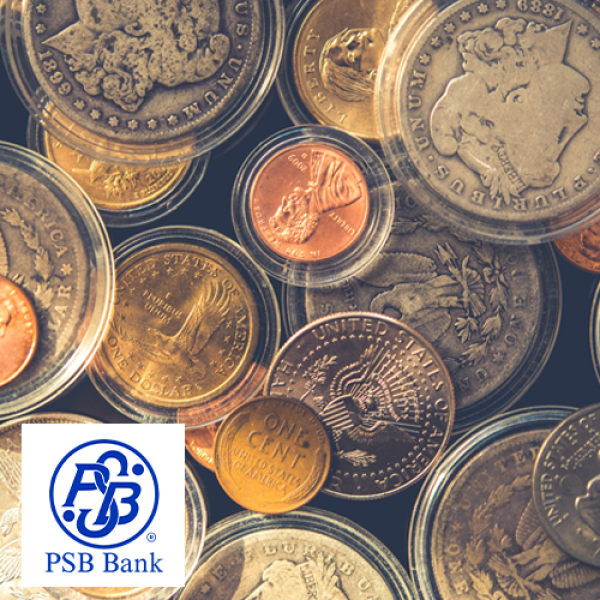
Around 600 BCE, the Kingdom of Lydia (in present-day Turkey) produced the first known stamped metal coins.
These coins solved a major problem: trust.
The stamp guaranteed weight and purity, making trade faster and more reliable.
Coins quickly spread through Greece, Persia, China, and beyond, laying the foundation for modern currency.
From Coins to Paper Money
As economies grew, carrying large amounts of metal became impractical.
The Rise of Paper Currency
- China introduced paper money during the Tang and Song dynasties
- Paper notes represented deposits of coins
- Europe adopted paper money centuries later, transforming banking systems
Paper money was lighter, easier to transport, and more efficient, leading directly to the modern financial systems we use today.
How the Past Shaped Modern Banking
From early currency experiments came:
- Government-backed money
- Banks and safekeeping systems
- Checks
- Debit and credit cards
- Online and mobile banking
Each innovation built on the same core idea: creating a trusted, efficient way to exchange value.
Why This History Still Matters
Even though many of us rarely use physical cash today, the principles behind money haven’t changed.
- Trust: From shells to digital payments, money works because people believe in it
- Access: Reliable currency helps communities grow and trade
- Adaptation: Financial tools evolve alongside society
Understanding the journey of money reminds us that banking changes to meet people’s needs.
Connecting the Past to the Present
The story of money is really a story about people finding better ways to trade, save, and plan for the future. From grain and shells to contactless payments, every step helped shape the financial tools we rely on today.
If you’re curious about how modern banking can help you manage your money with confidence, whether that’s saving, spending, or planning ahead, PSB Bank is always here to help.